What Tree Removal Actually Costs — And Why Quotes Vary So Much
Two companies can look at the same tree and quote hundreds of dollars apart. Here is what actually drives the price, and how to tell a fair quote from a bad one.
4 min read
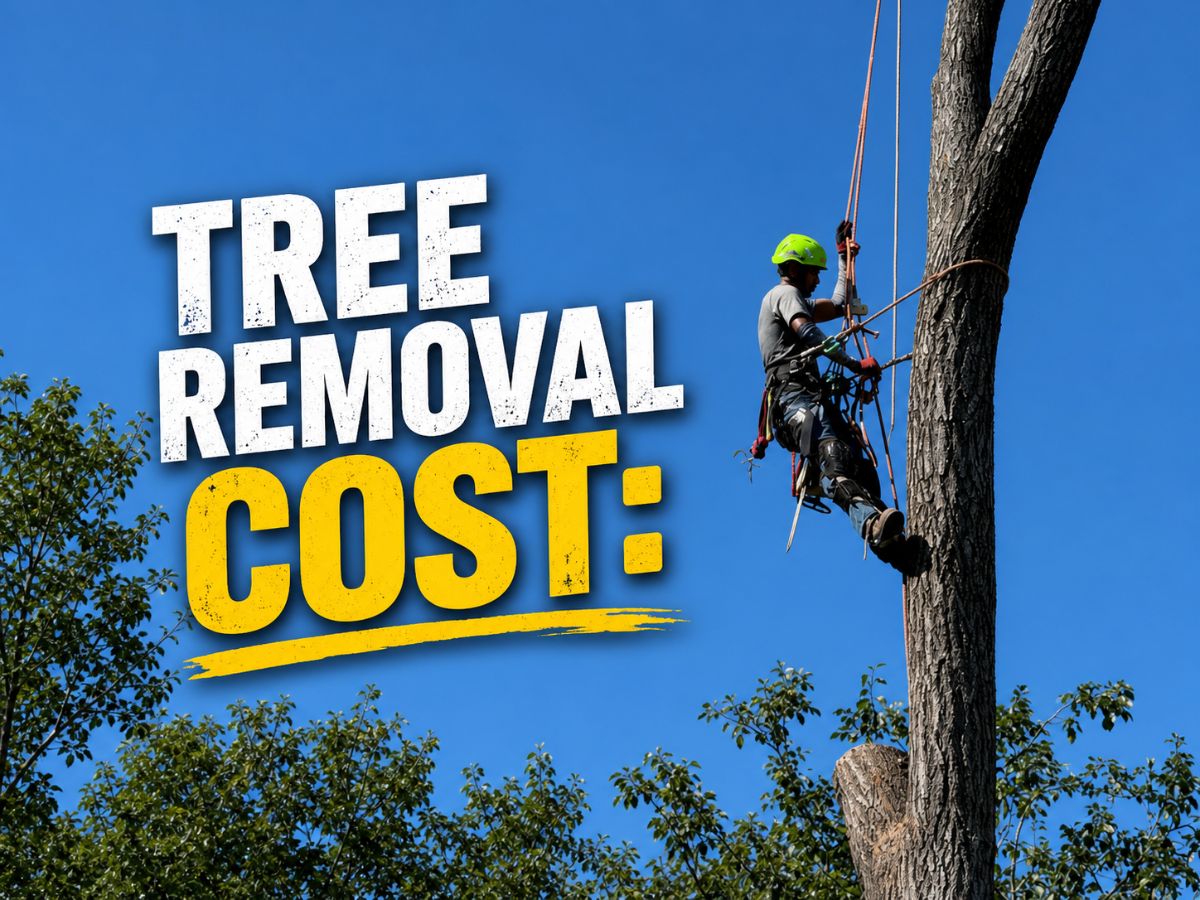
Ask three tree companies to quote the same removal and you can easily get three numbers that differ by a factor of two. That spread makes homeowners suspicious, and it should — but the variation is usually real, not opportunistic. Removing a tree is a rigging problem, and the price tracks how difficult the rigging is far more than it tracks the size of the tree.
Here is what a crew is actually pricing when they walk your property.
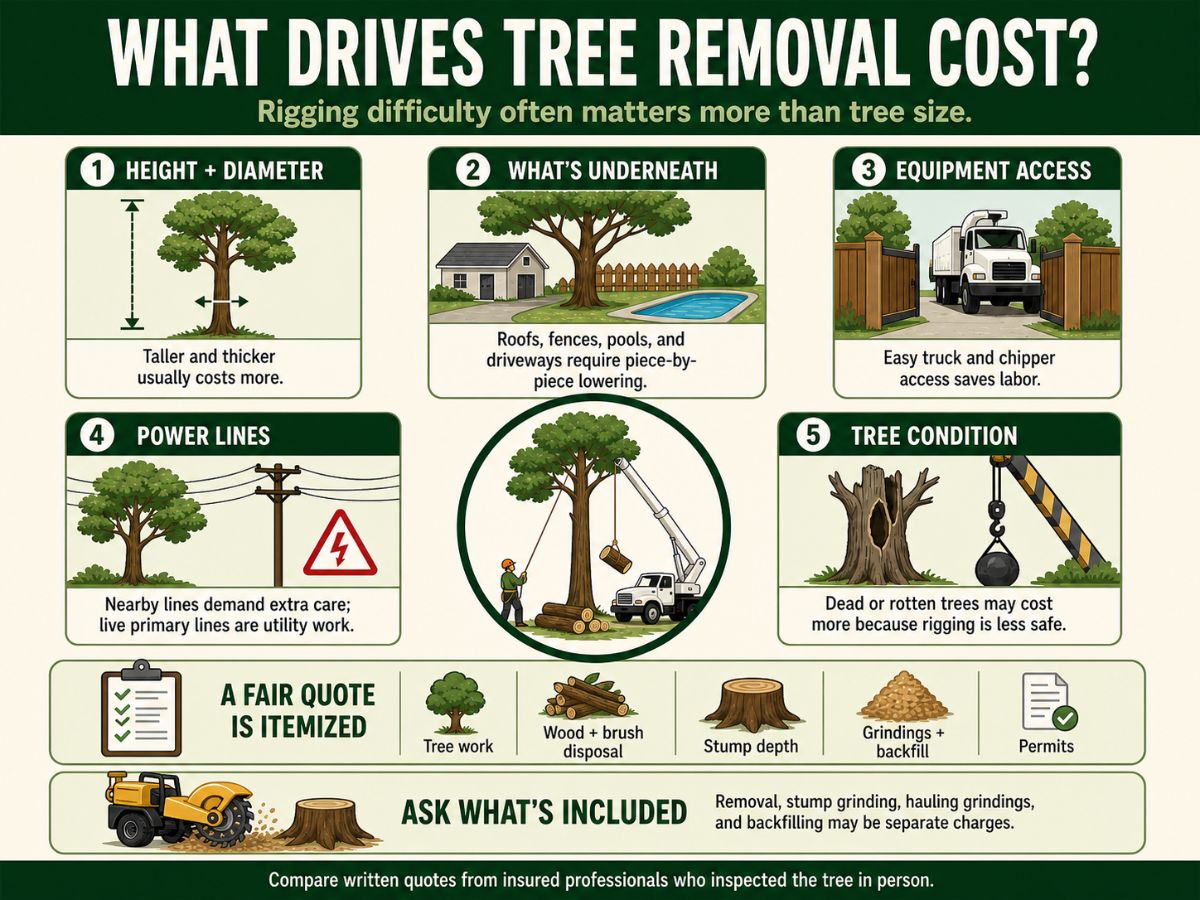
The five things that move the price
Height and trunk diameter. The obvious one, and the least interesting. A 30-foot ornamental and an 80-foot pine are different jobs, but two trees of the same height in different positions can differ more in price than two trees of different heights in the same position.
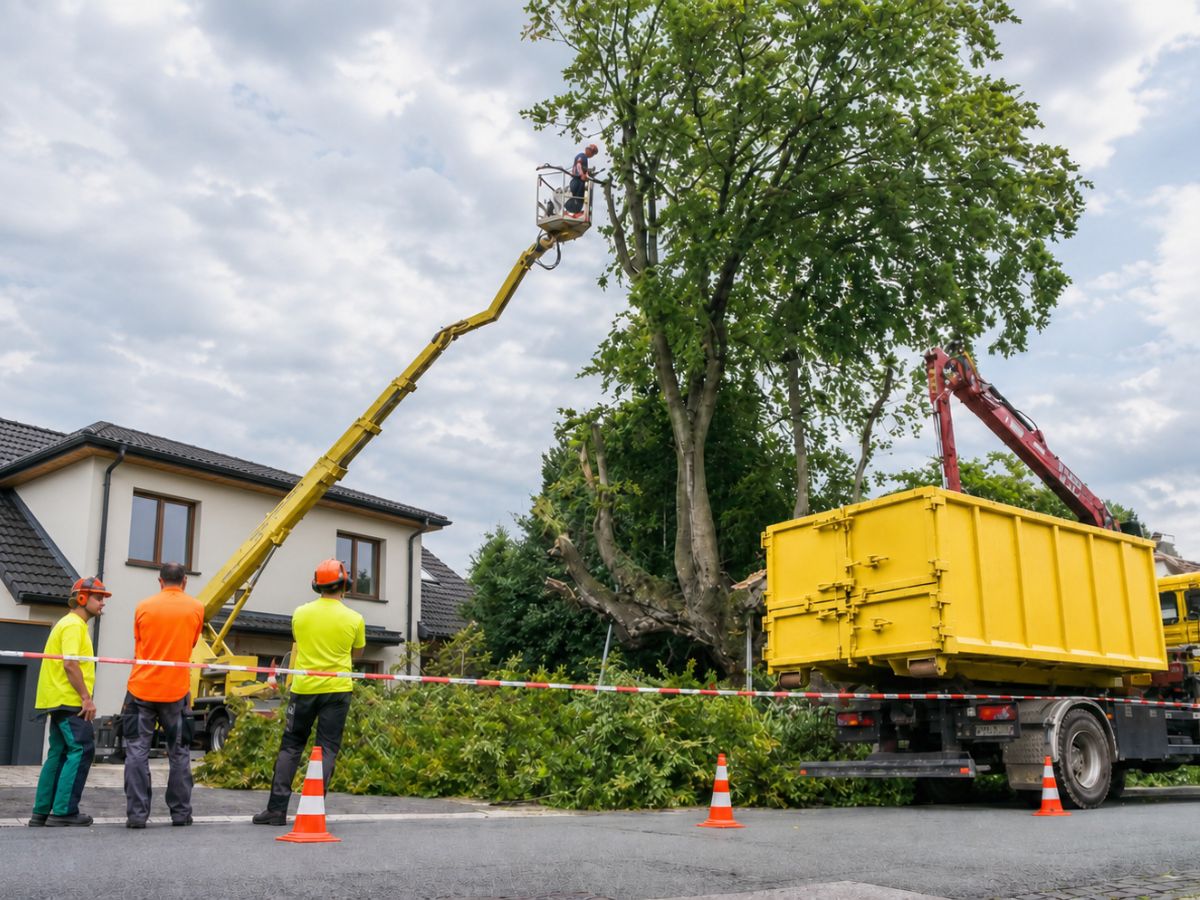
What is underneath it. This is usually the single biggest factor. A tree in an open field can be felled in one piece — cut the hinge, drop it, buck it up on the ground. The same tree over a roof, a fence, a pool, or a neighbour's driveway has to be dismantled from the top down, piece by piece, with each section roped and lowered. That can turn a two-hour job into a full day.
Access for equipment. If a crew can back a chipper and a bucket truck up to the trunk, the work goes quickly. If everything has to be carried through a side gate to a back yard, expect to pay for the extra labour. Narrow lot lines and no rear access are what make otherwise ordinary removals expensive.
Proximity to power lines. Anything close to a service drop requires more care, and anything touching primary distribution lines is not a tree service job at all — that is the utility's work. A company that offers to cut a tree resting on a live primary line is telling you something important about how they operate.
Condition of the tree. Counter-intuitively, a dead or rotten tree often costs more than a healthy one, not less. Climbers cannot trust a decayed stem to hold rigging loads, so the job may need a crane or a bucket truck that a healthy tree of the same size would not.
Rough ranges, and why you should not trust them too much
Published national averages for residential tree removal generally land somewhere in the low hundreds for a small tree and run into the low thousands for a large, difficult one. Emergency and after-hours work costs more, sometimes substantially.
Treat any number you read online — including that one — as a sanity check, not an estimate. Local labour costs, disposal fees, and how many crews are competing in your market move the baseline enough that a "typical" national figure can be badly wrong for your street. After a major storm, demand spikes and prices with it.
The number that matters is the one on a written quote from someone who has physically looked at your tree.
How to read a quote
A quote worth taking seriously is itemised. You should be able to see, separately:
- Felling or dismantling the tree
- Removal and disposal of the wood and brush
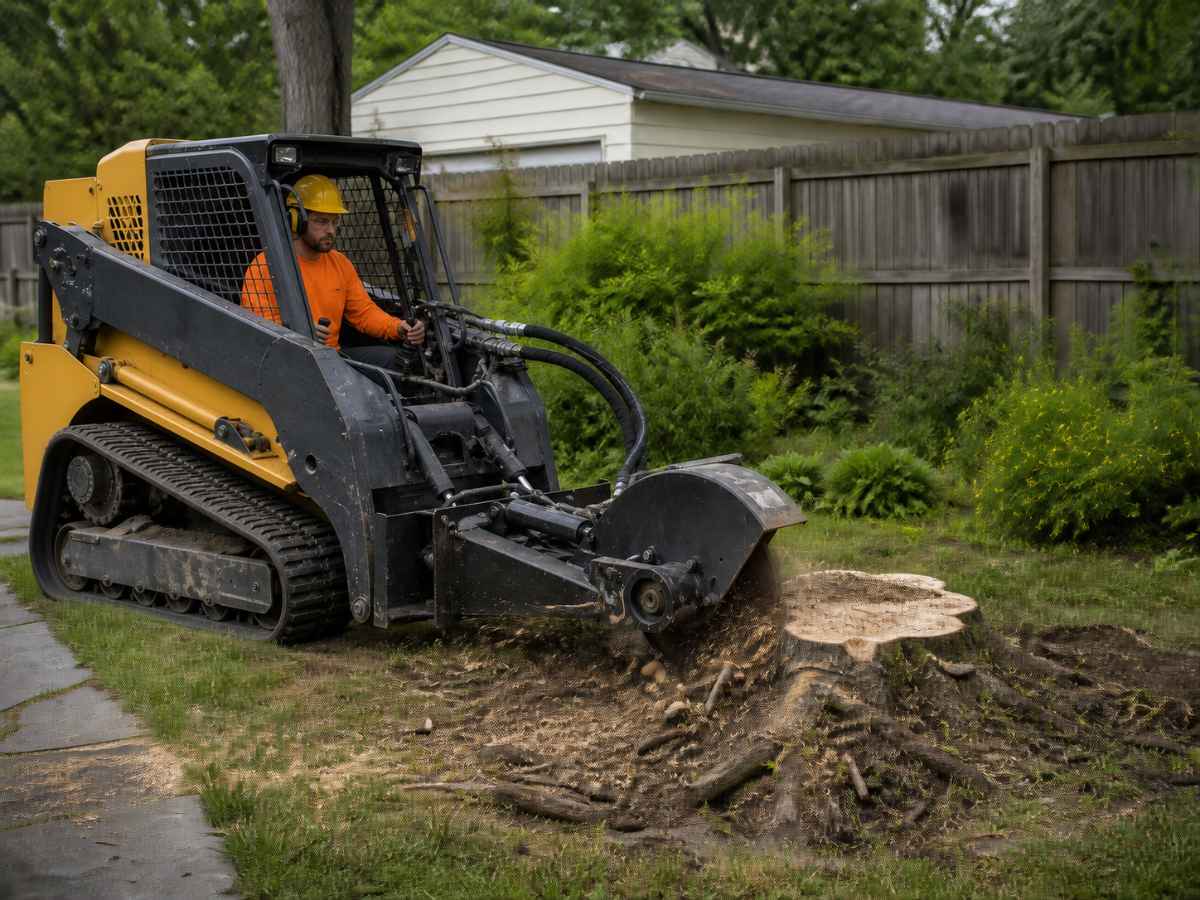
- Stump grinding, if included, and to what depth
- Removal of the grindings and backfill, if included
- Any permit handling
Vague single-line quotes ("Tree removal — $1,800") are not necessarily dishonest, but they give you nothing to compare against a competitor and no basis for a conversation if the scope changes.
Ask specifically what happens to the wood. Some companies haul everything; some leave the trunk cut into rounds if you want firewood; some charge less if you keep the chips. All are reasonable, but they are different jobs at different prices.
The quote is only half of it
Price is the easy thing to compare, which is exactly why it is the wrong thing to compare first. Before you weigh the numbers, confirm that each company carries general liability and workers' compensation insurance, and ask for the certificate directly from their insurer rather than a photocopy. A crew member injured in your yard, working for an uninsured contractor, is a problem that can land on your homeowner's policy.
We cover what to check and what the credentials actually mean in hiring an arborist and the questions to ask before you hire.
When removal is not the answer
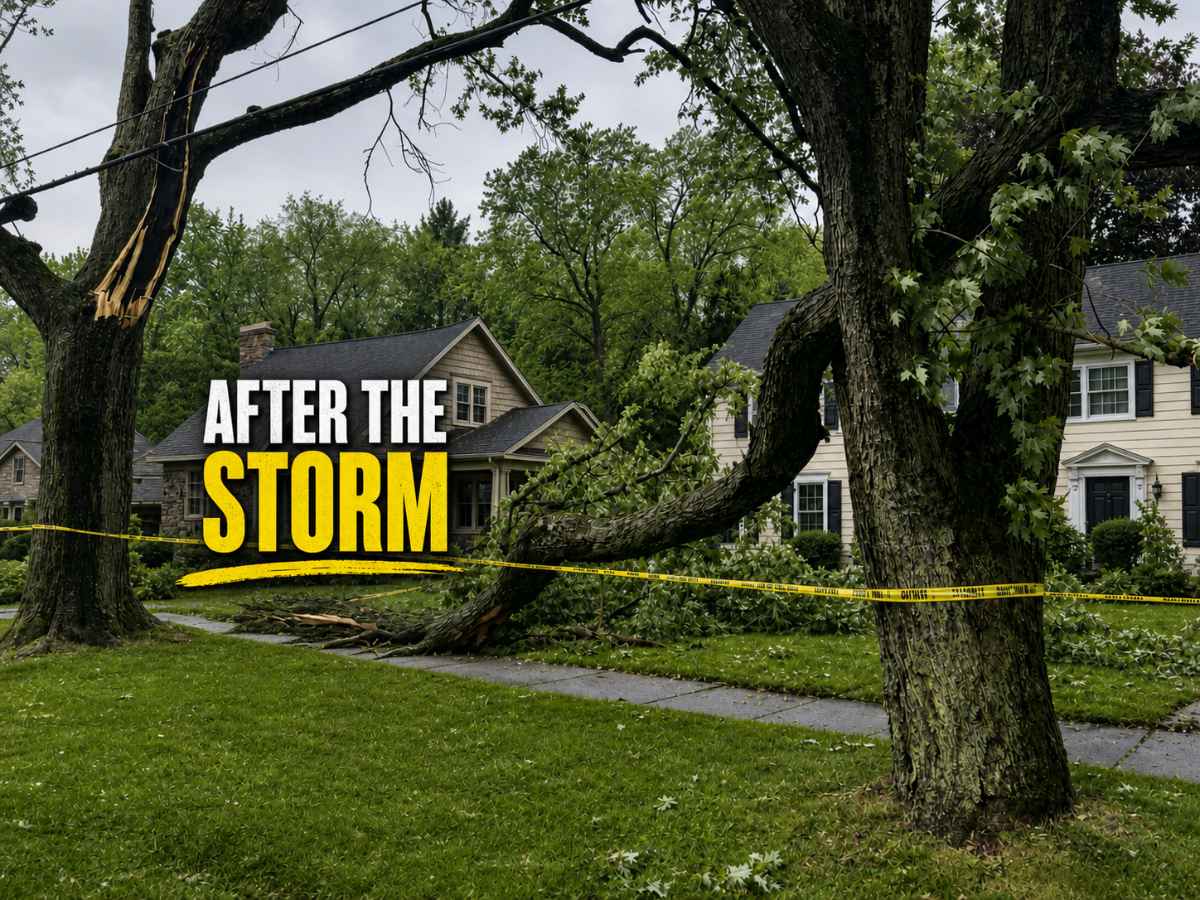
Plenty of trees quoted for removal do not need to come out. Storm damage looks catastrophic and often is not; a tree that has dropped a large limb may be perfectly sound. Structural pruning, cabling, or simply waiting a season are all cheaper than removal and keep a mature shade tree that would take twenty years to replace.
If you are unsure, trim or remove walks through how the decision is actually made — and getting an assessment from a certified arborist who is not also bidding on the removal is rarely wasted money.