Austin is split by the Balcones Escarpment, and the difference is stark. West of it, the Hill Country side has thin soil over limestone, fast drainage and high pH. East of it, blackland clay holds water and moves with moisture. The same species can behave completely differently on either side of town, and so can the right answer about watering, planting depth and species choice.
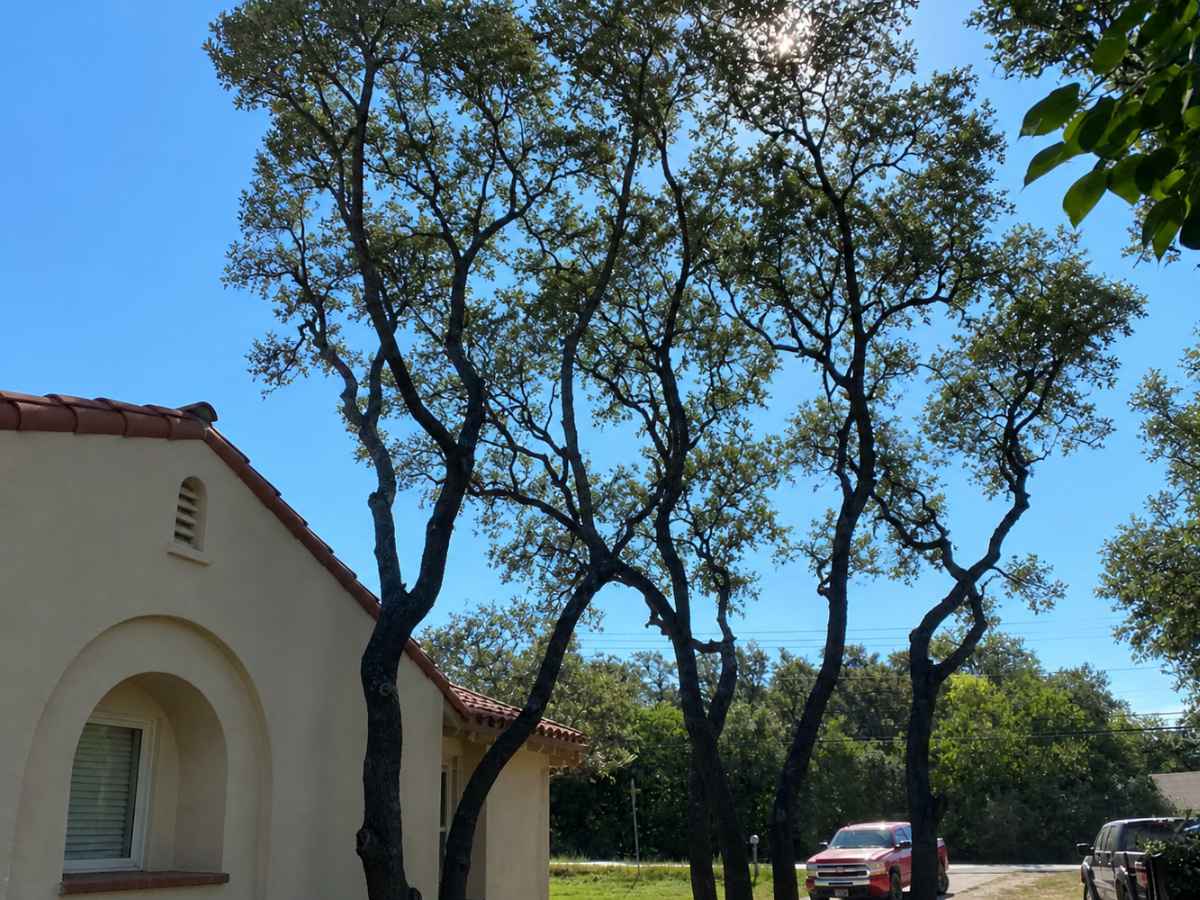
The Hill Country side is also the epicentre of one of the most serious oak wilt outbreaks in the United States. Central Texas live oaks form extensive root grafts, and the fungus travels through those connections as well as by beetle, which is why the disease spreads as an expanding front through a neighbourhood rather than appearing at random. Local guidance on pruning timing and immediate wound painting is genuinely important here, not merely cautious.
Austin also has unusually strong tree protection rules by Texas standards, including protections for larger-diameter trees and a separate heritage category. Confirm current thresholds with the City before planning any removal.
Tree service questions in Austin
- Does Austin require a permit to remove a tree?
- Often, yes — Austin has stronger tree protection than most Texas cities, with permit requirements tied to trunk diameter and a separate heritage tree category covering certain species at larger sizes. Thresholds, protected species and the review process change, so confirm current requirements with the City of Austin before scheduling work. Surrounding jurisdictions have their own rules.
- Why is oak wilt such a serious problem in Austin?
- Central Texas live oaks form extensive root grafts between neighbouring trees, so the fungus moves underground from tree to tree as well as being carried to fresh wounds by sap-feeding beetles. That is why it advances as a front through a neighbourhood. Avoiding oak pruning from February through June, and painting every oak wound immediately in any season, are the two practical controls.
- Why does advice differ between east and west Austin?
- The Balcones Escarpment divides the city. West of it, thin soil over limestone drains fast and runs alkaline; east of it, blackland clay holds moisture and shrinks and swells. Rooting depth, watering approach and suitable species all differ across that line.
- How should I water trees on the Hill Country side?
- Shallow soil over limestone holds little water, so deep and infrequent soaking at the canopy edge works better than frequent light watering. Mulch matters more here than on deeper soils. During drought restrictions, prioritise established trees over lawn — a lawn recovers in a season, a mature tree does not.