Storm Damage: What to Do in the First 24 Hours
What is genuinely an emergency, what can wait until Monday, and how to avoid the contractors who follow storms into neighbourhoods.
4 min read
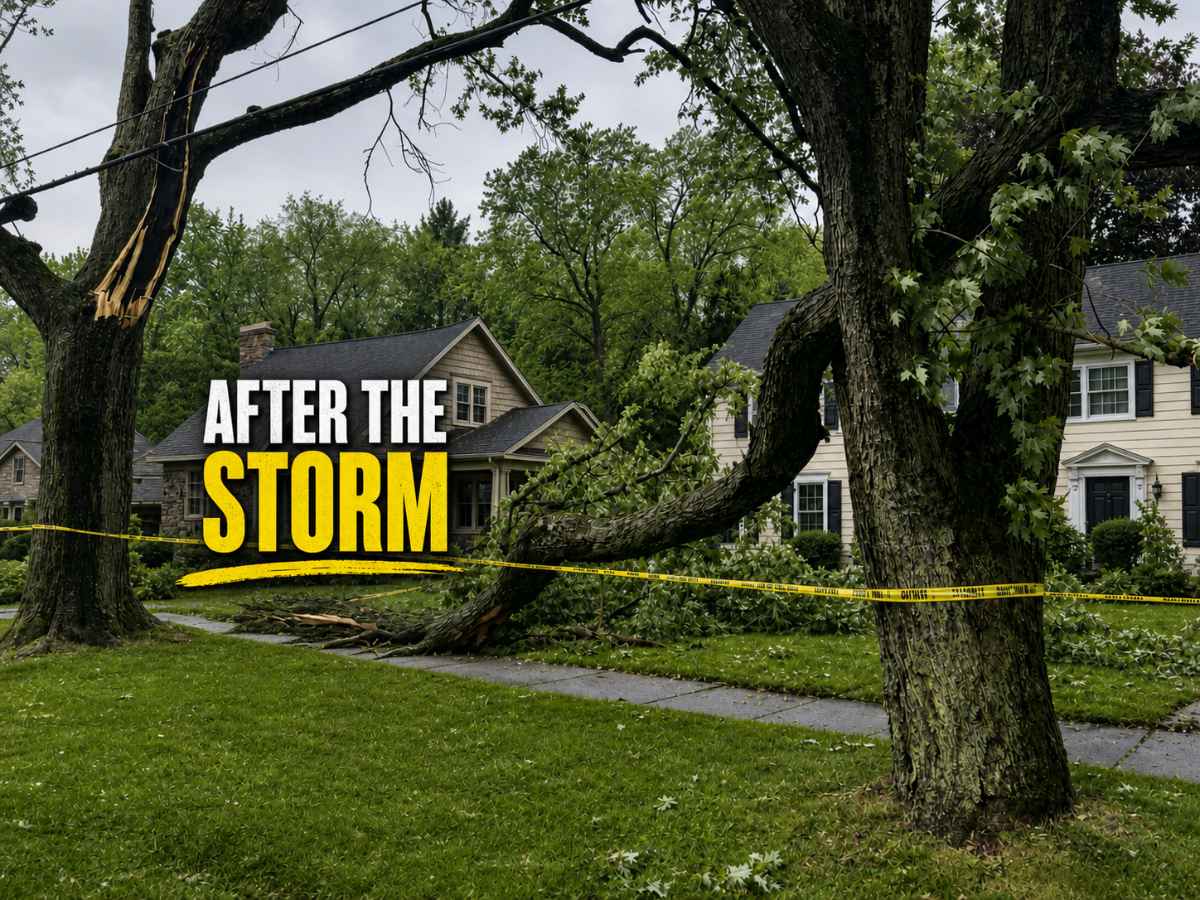
After a serious wind event the phones at every tree company in the area ring at once. Crews triage, and the jobs that get answered first are the ones that are genuinely dangerous. Knowing which category you are in saves you from paying emergency rates for work that could wait — and from waiting on work that should not.
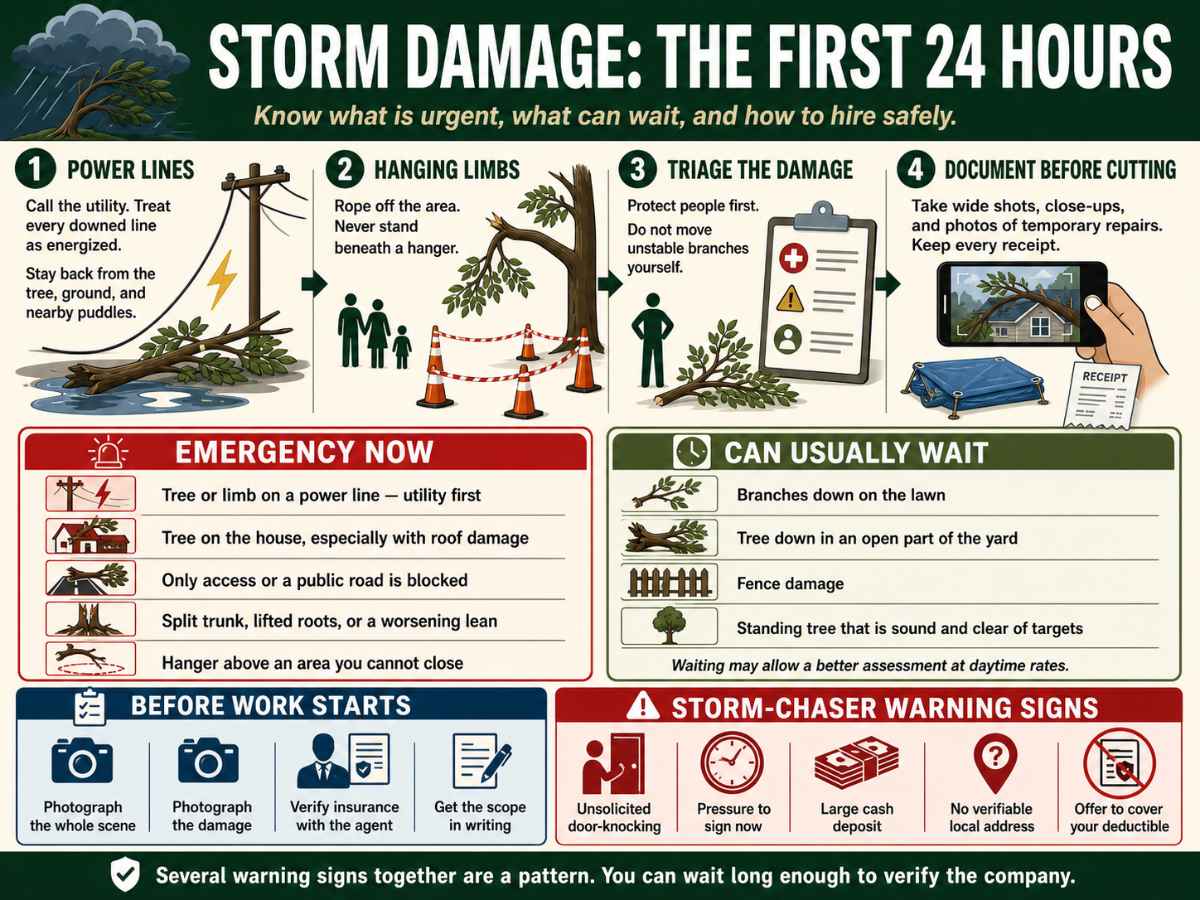
Stop and call the utility first
If a tree is touching, resting on, or has brought down any power line, that is not a tree service call. Call the utility and treat every downed line as energised.
This matters more than people expect, because a line can be live and show no sign of it — no sparking, no humming, nothing. Energised lines can also charge the ground around them and the tree itself. Keep everyone well back, including from puddles near the line, and do not attempt to move branches off it.
The distinction that matters:
- Service drop — the line from the pole to your house. Lower voltage, still lethal. Usually the utility's responsibility to the point of attachment.
- Primary distribution — the higher lines on the pole. Utility only, always.
No legitimate tree service will cut a tree off a live primary line. A company that offers to is either uninsured, unqualified, or both.
What counts as an emergency
Genuine after-hours emergencies, in rough priority order:
- A tree or limb on a power line — utility, not tree service.
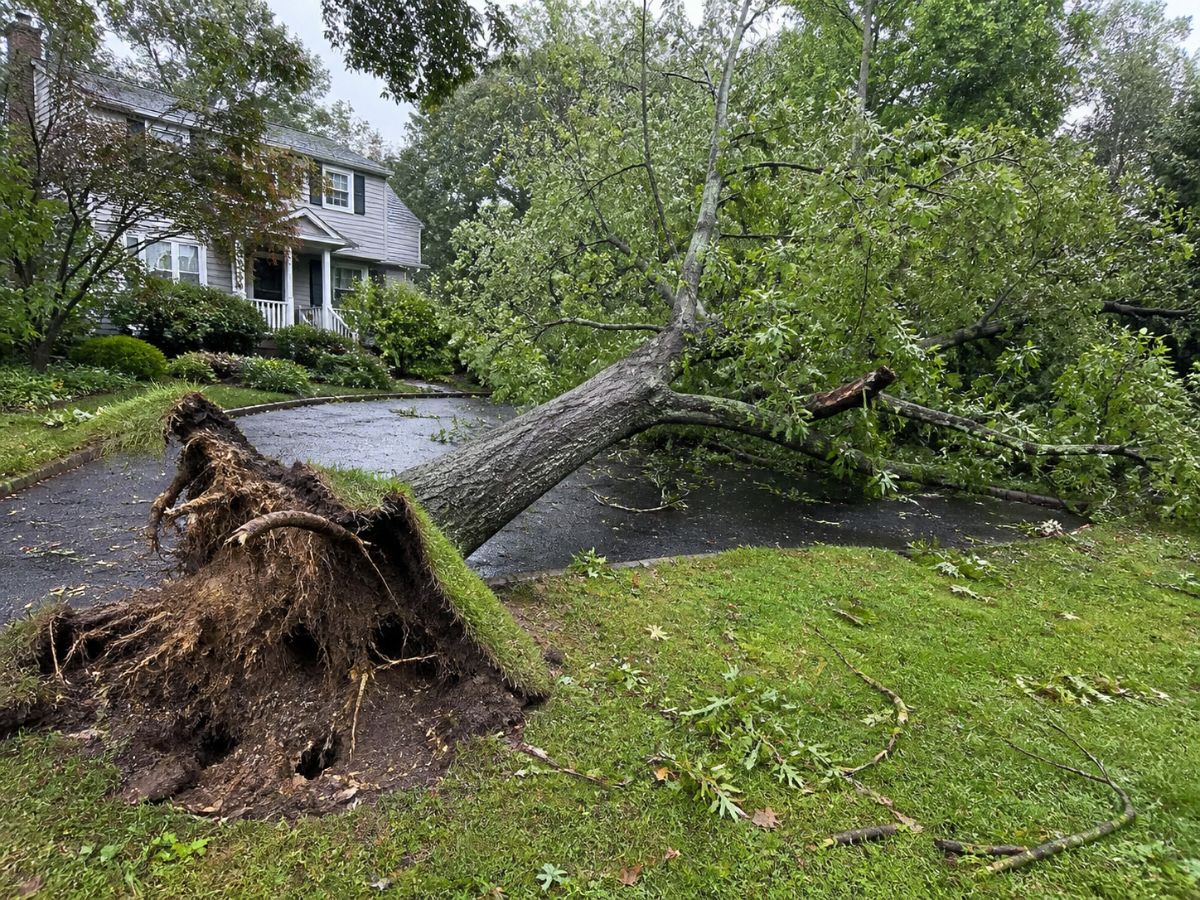
- A tree on the house, especially through the roof envelope where water is now getting in.
- A tree blocking the only access to the property, or blocking a public road.
- A tree that has partially failed and is still standing — split trunk, lifted root plate, leaning further than it was — with a house, driveway or neighbouring property underneath.
- Hangers over an area you cannot rope off, such as a shared walkway.
What can wait
Most storm damage, honestly. If it is on the ground and not blocking anything, it will still be there on Monday at daytime rates:
- Branches down on the lawn
- A tree down in an open part of the yard
- Fence damage
- A tree that has lost limbs but is standing, sound, and over nothing important
Waiting also gets you a better assessment. In the first 24 hours, everyone is triaging. A few days later, someone can actually look at whether the tree is worth saving.
Document before anything gets cut
Before a saw touches anything, photograph it — wide shots showing the tree's relationship to the structure, then close-ups of the damage. Get the whole scene, not just the broken part.
Insurers generally look at this differently than homeowners expect. Coverage often turns on whether the tree hit a covered structure, not on the tree itself. A tree that falls in your yard and damages nothing may not be covered at all; the same tree through the roof usually is. Removal of the debris is frequently subject to its own sub-limit.
Emergency mitigation to prevent further damage — tarping an opened roof, for instance — is normally covered, but keep every receipt and photograph the temporary work too.
Storm chasers
Large storms attract crews from out of the area. Some are legitimate companies expanding capacity where it is needed. Others are not, and the pattern is recognisable:
- Door-knocking within hours of the storm, often before you have called anyone
- Pressure to sign immediately, or "we can do it today while we're here"
- Large cash deposits up front
- Out-of-state plates and a phone number that is not local
- No physical address you can find
- An offer to "handle the insurance", sometimes with a hint about covering your deductible — which is insurance fraud, and you would be a party to it
Every one of these is compatible with an honest business having a bad sales style. Several together is a pattern.
After the immediate danger is handled
Once things are stable, the useful question is whether the damaged trees still standing are sound. Storm damage frequently looks worse than it is — a tree that has lost a large limb can be perfectly healthy — and occasionally looks far better than it is, when the load path through the trunk has been compromised without obvious external damage.
Warning signs of a hazardous tree covers what to look for, and trim or remove walks through the decision on the ones that are borderline.