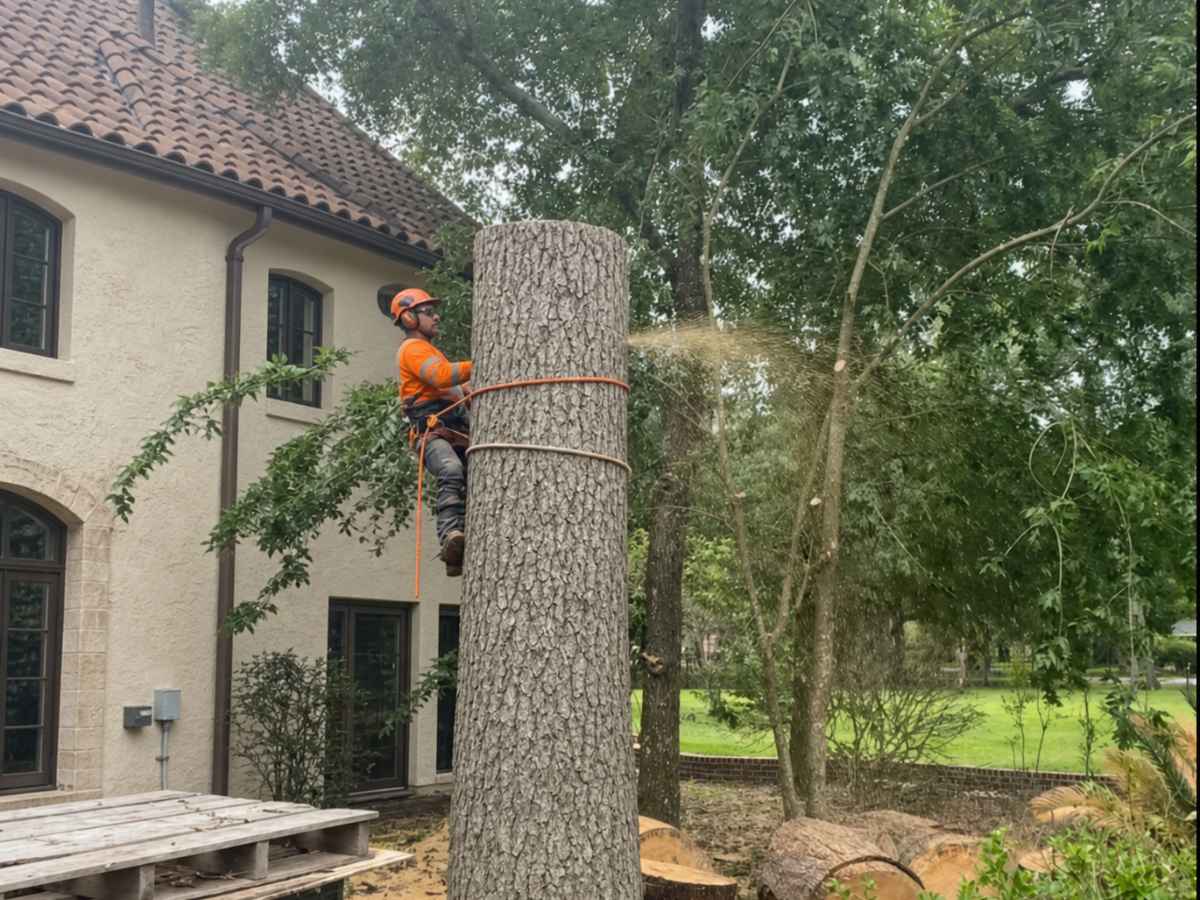
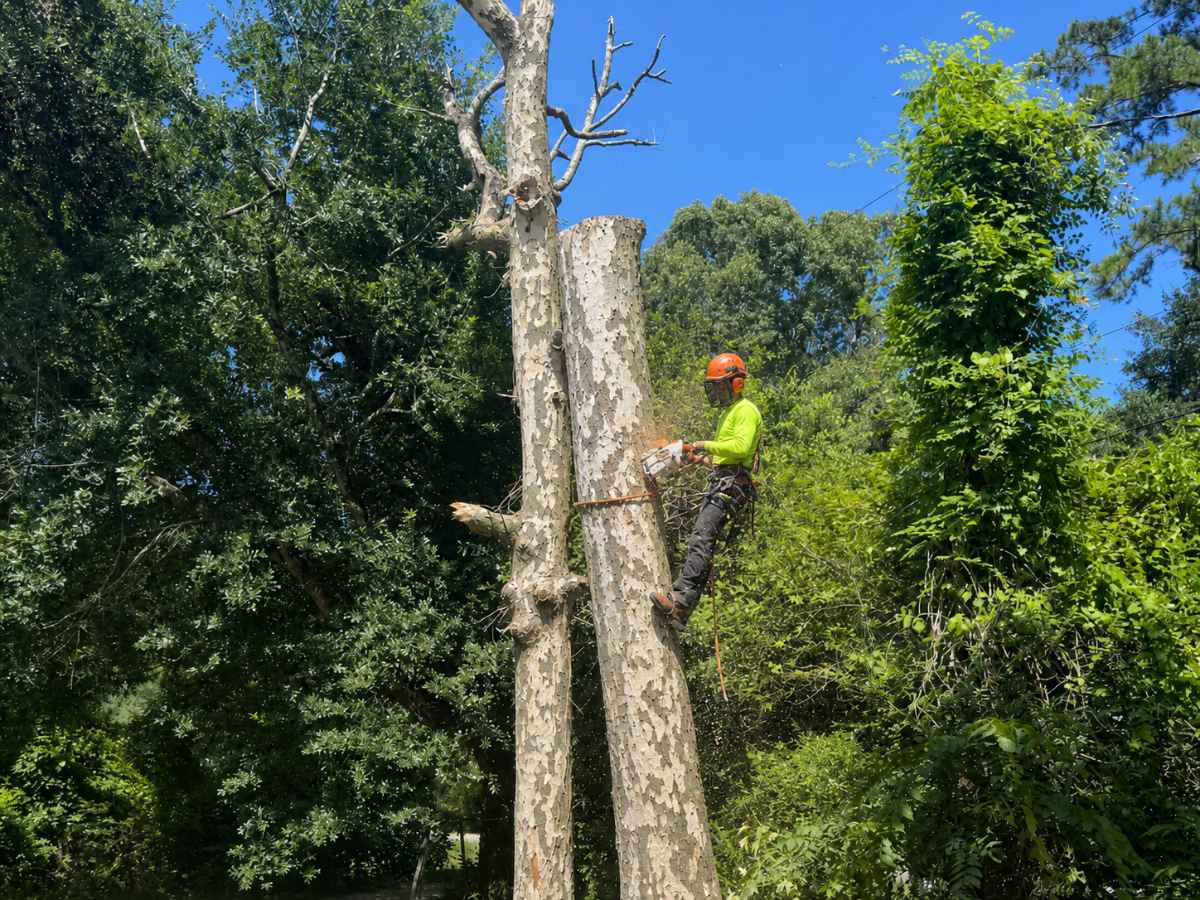
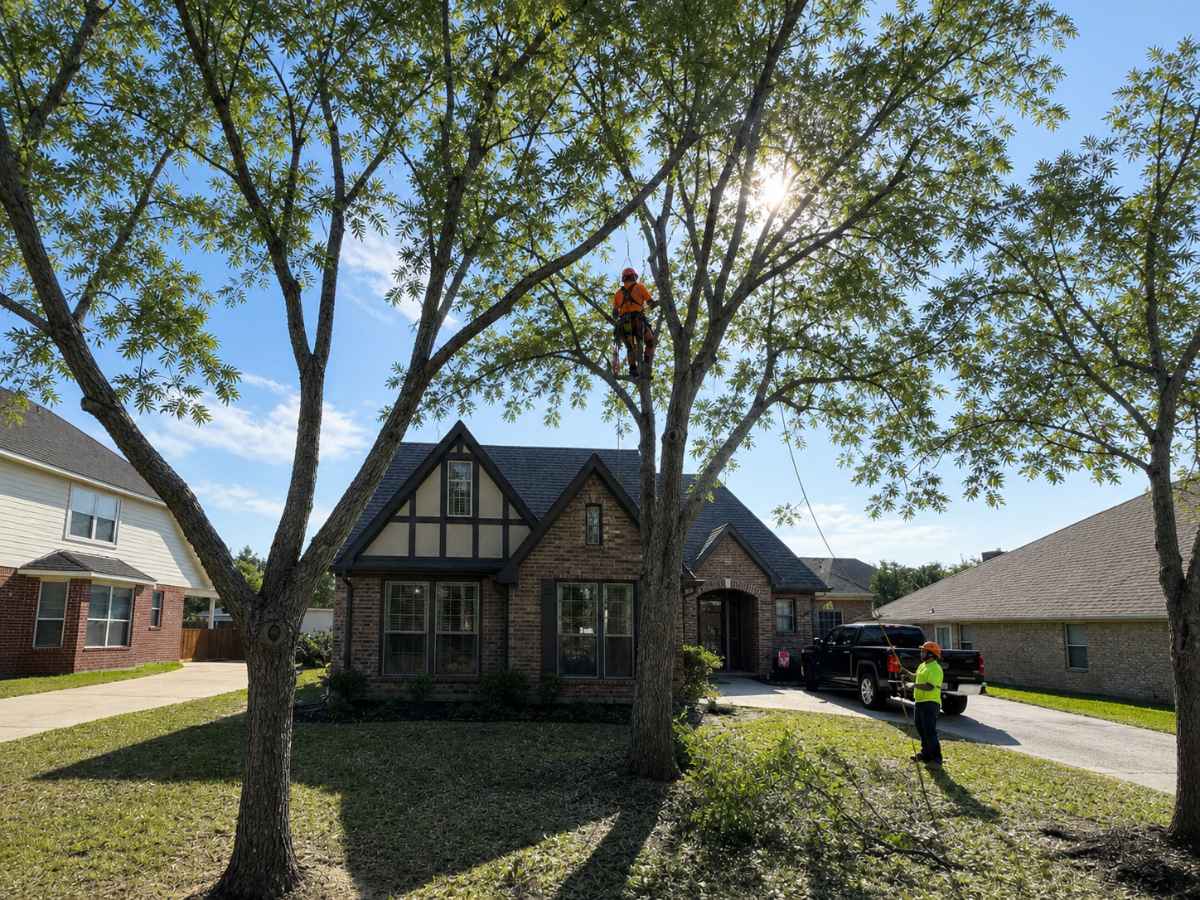
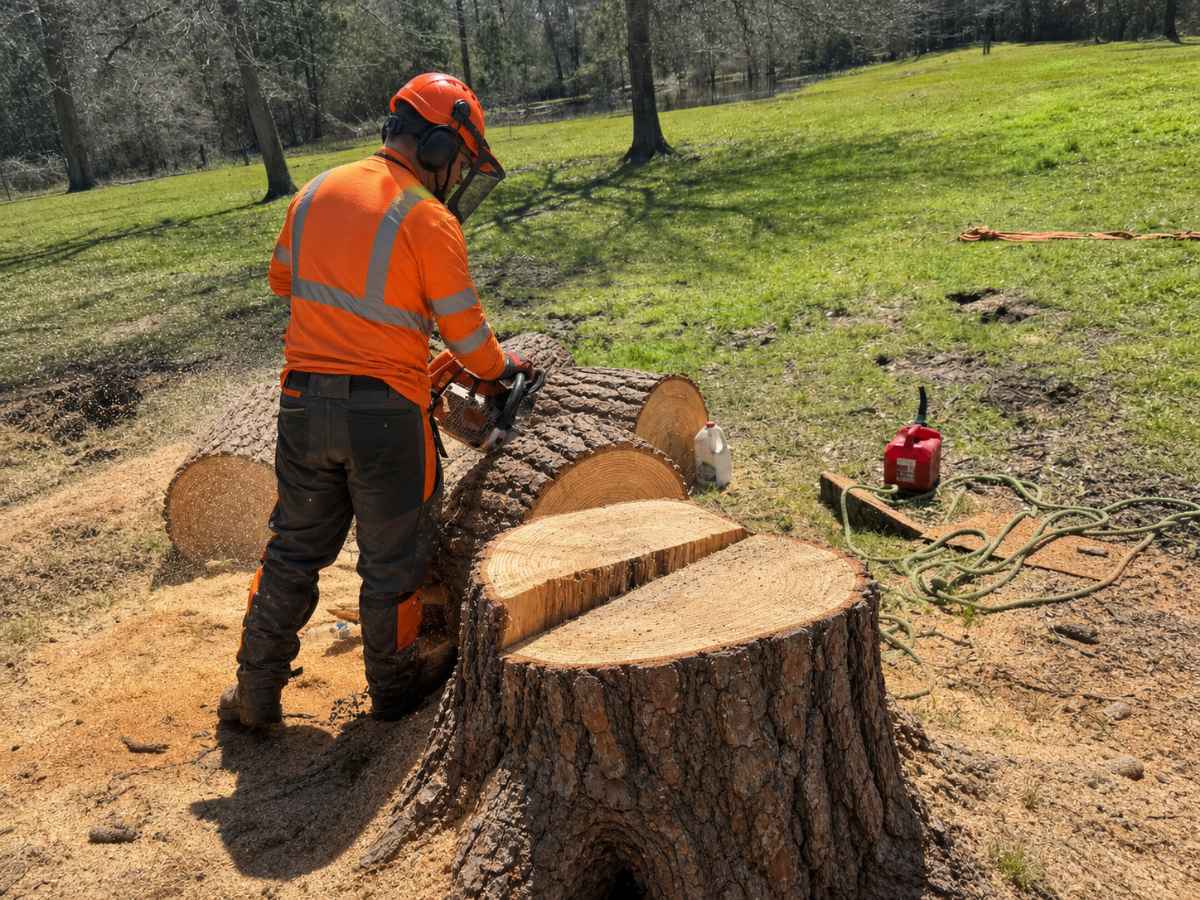
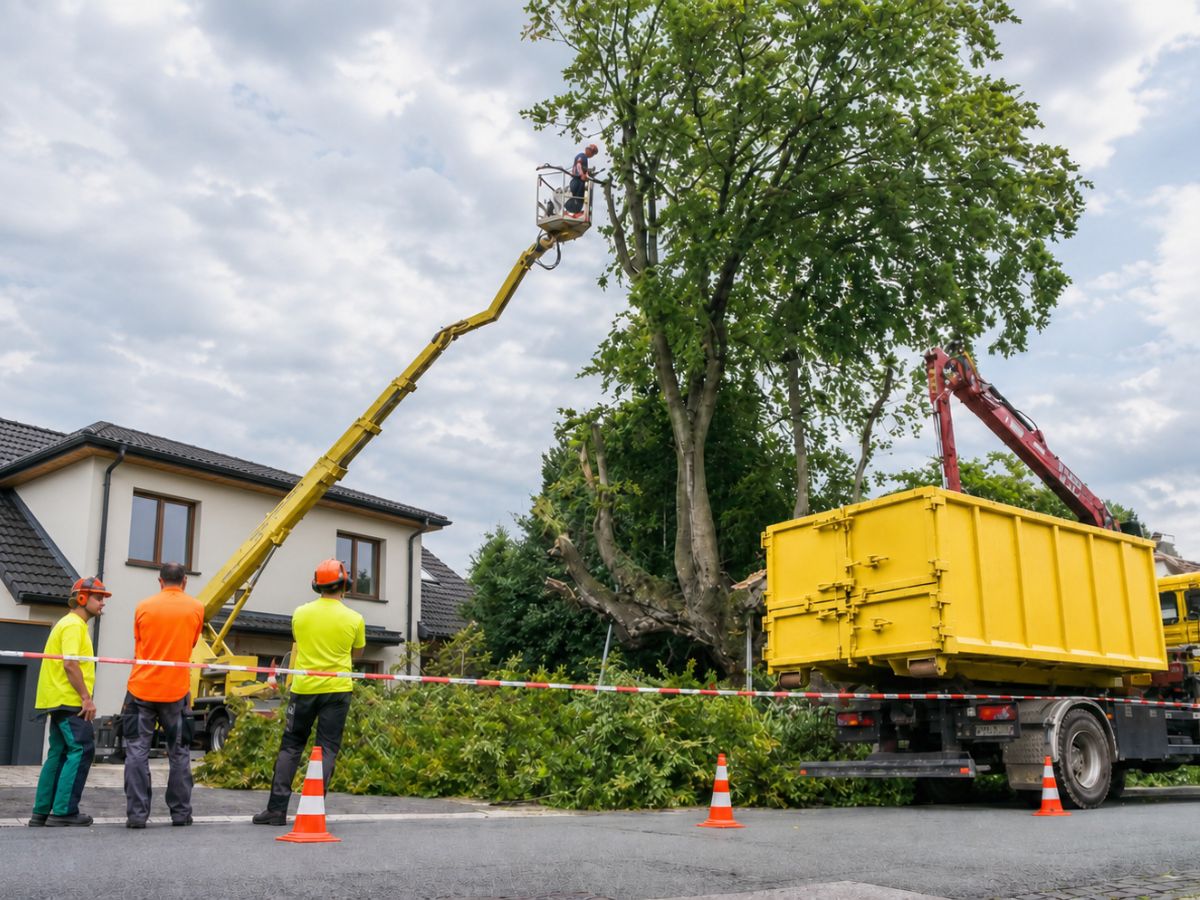
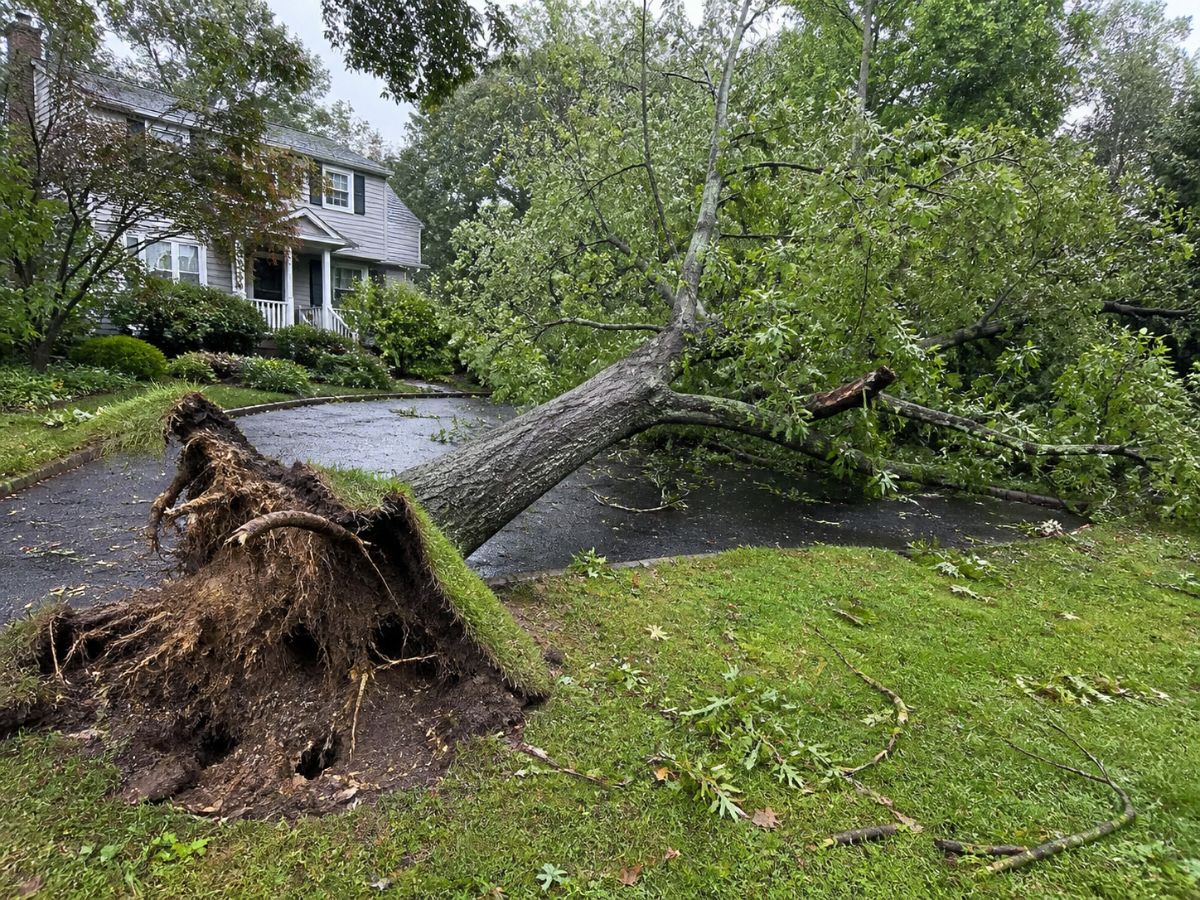
Fort Worth straddles a soil boundary that matters more than most homeowners realise. The eastern side of Tarrant County sits on the same Blackland Prairie clay as Dallas, while the western side runs onto the Western Cross Timbers — sandier, shallower soil over sandstone and limestone that historically carried post oak and blackjack oak woodland. Two properties a few miles apart can therefore have genuinely different tree problems.
Post oak is the species that catches people out here. It is native, long-lived and almost impossible to keep alive once its root zone is disturbed. Post oaks are notoriously intolerant of grade changes, trenching, irrigation and soil compaction, and a mature specimen that has stood for a century will often decline within a few years of a new lawn sprinkler system or a driveway extension.
North Texas storm season peaks in spring, with straight-line winds and hail arriving well before summer heat. As in Dallas, oak wilt is present and the February to June pruning restriction applies.
Tree service questions in Fort Worth
- Why did my post oak die after we landscaped?
- Post oaks are exceptionally sensitive to root-zone disturbance. Grade changes, trenching, compaction from equipment, and routine lawn irrigation over the root plate all contribute — they are adapted to dry, undisturbed native soil. Decline typically appears one to three years after the work, which is why the connection is often missed. The practical rule is to leave the area under the canopy alone.
- Does the soil really differ across Fort Worth?
- Yes, noticeably. Eastern Tarrant County is largely Blackland Prairie clay, while the west runs onto the sandier Western Cross Timbers. Drainage, rooting depth and suitable species all change across that boundary, so advice that works for a neighbour on the other side of town may not apply to your lot.
- When can I prune oaks in Fort Worth?
- Avoid February through June, the peak activity period for the beetles that spread oak wilt, and seal any oak wound immediately if storm damage forces an out-of-season cut. Late winter is the preferred window for structural work.
- What should I check before spring storm season?
- Look for codominant stems with included bark, which split under wind loading; large deadwood in the upper canopy; and heavy end weight on long lateral limbs. Any of those over a house or driveway is worth an assessment before the first line of storms rather than after.